
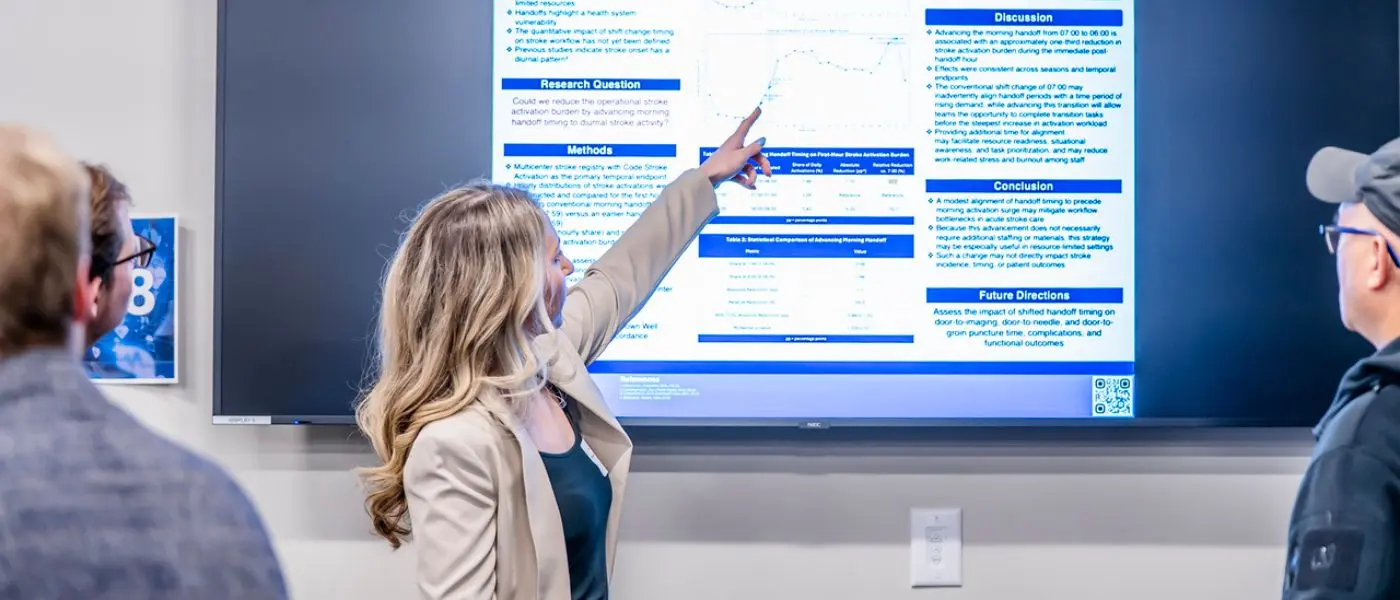
Students at the Thomas F. Frist, Jr. College of Medicine host campuswide event highlighting collaboration in health care
When second-year medical student Marcelina Puc first imagined bringing a global medicine symposium to Belmont University, she hadn’t even started classes at the Thomas F. Frist, Jr. College of Medicine.
“I talked about starting a global medicine symposium in my interview,” Puc said. “And then once we got here, I just kept thinking — why not?”
This January, that idea became a full-scale event. The Global Medicine Symposium, themed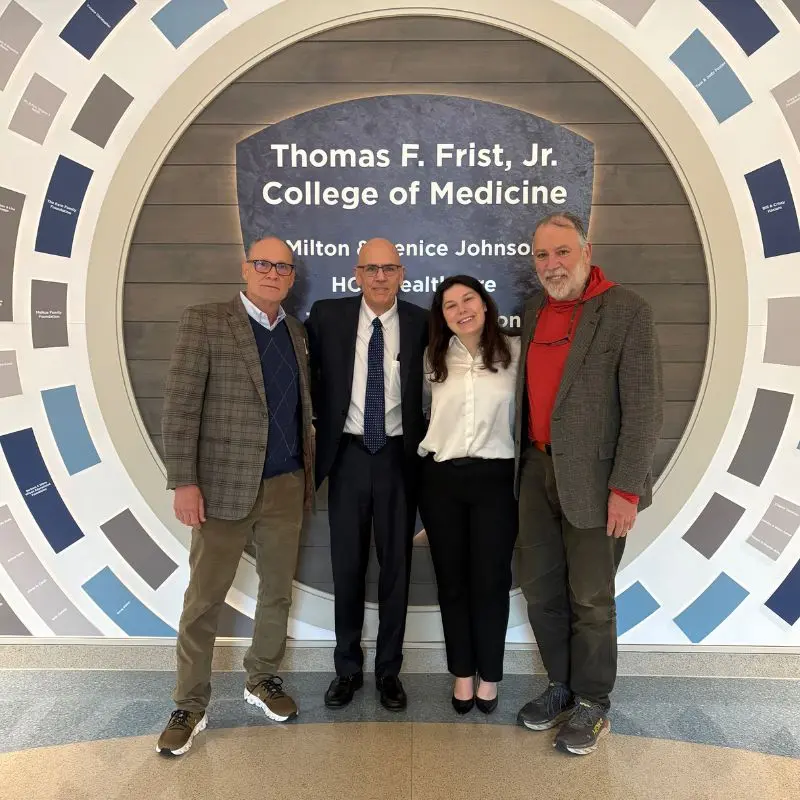 “Global Resilience in Medicine: Grow, Adapt, Transform," brought together keynote speakers, panelists and student researchers for a day of conversation and collaboration inside the College of Medicine.
Nearly 60 attendees — including medical, nursing, pharmacy and physical therapy students — gathered for the event, underscoring both the interest in global health and the momentum building within Belmont’s newest college.
To bring her vision for the symposium to life, Puc recruited fellow second-year student Claire Buck as a co-organizer. Together, they turned an idea into one of the college's most ambitious student-led events to date.
The Importance of Global Medicine
According to Puc, global medicine can be difficult to define.
“It’s really an exchange,” she said. “As much as you’re providing a service, you’re teaching, but you’re also learning. I think global medicine is often defined as ‘we go abroad and help,’ but that’s the wrong idea. It’s about building community and learning from one another to care for our patients.”
 Puc’s passion for global health began years before medical school. After completing her undergraduate degree in New York, she spent five years working in health care consulting, clinical research and hospitals in Philadelphia and Baltimore. While at the Children’s Hospital of Philadelphia, she met surgeons doing long-term work abroad, including one of this year’s keynote speakers, Dr. David Spiegel.
“Once you meet one mentor like that, you start meeting more,” Puc said. “You start to see what’s possible.”
Buck’s path to global medicine looked different. A Rochester, New York, native who took two gap years working as a medical assistant, she became involved early in medical school with Nashville’s immigrant and refugee communities through the Nashville International Center for Empowerment.
“I always knew I wanted to practice medicine with a service orientation,” Buck said. “But I didn’t know exactly how that would play out. Supporting immigrant families here in Nashville is global medicine in its own way.”
The symposium reflected those varied perspectives. Keynote sessions and panels highlighted global surgery, infectious disease, long-term patient care and international research collaborations. Speakers represented academic medicine, nonprofit leadership, mission-driven work and government programs, modeling the many ways physicians can engage globally.
“What really inspired me about our speakers was their creativity and willingness to collaborate,” Buck said. “Regardless of their motivation, they all shared a humility and a sense of responsibility for problems they saw in the world.”
Learning What the Classroom Can’t Teach
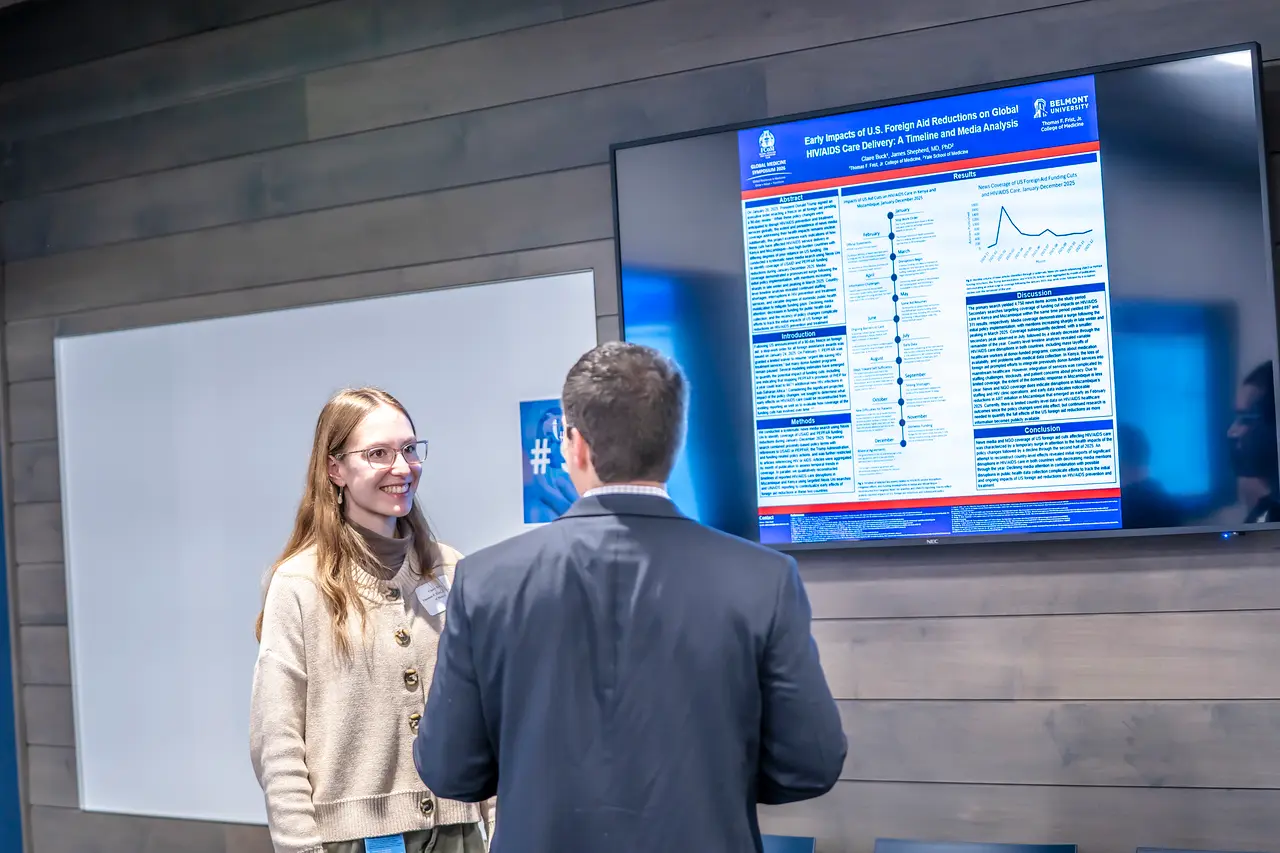
The event featured keynote addresses, a global surgery panel, a global medicine panel and a student poster session. Student poster winners included Elizabeth Boger (MS1), Katie Pursley (MS2) and resident Baryalay Khan.
But for Puc, the most powerful outcomes weren’t listed on the printed program.
“You can’t get the magic of medicine inside a classroom,” she said. “You have to build your foundation of knowledge, but it’s easy to lose sight of your ‘why.’ Every speaker reminded us why we chose this path.” 
She recalled looking around the auditorium and noticing something rare.
“There wasn’t a single person on their laptop,” she said. “Everyone was locked in.”
Buck agreed that the in-person conversations were just as meaningful as the formal presentations.
“I had great impromptu conversations over breakfast and lunch,” she said. “That kind of rich exchange — talking about different health systems, different research approaches — you just can’t replicate that in a lecture.”
The theme of resilience also resonated deeply. Puc noted that the theme was chosen in response to “huge changes” in the global medicine landscape, reinforcing the importance of humility, sustainability and long-term partnership rather than short-term intervention.
“These events give people space to get inspired — or re-inspired,” Puc said. “You don’t know what you don’t know until you’re exposed to it.”
A Student-Led Vision, Supported by Community
Pulling off the symposium required months of planning. Puc and Buck credited a broader planning committee and supportive faculty members for helping bring the event to life, with funding largely supported by a Belmont leadership grant.
“It wasn’t two people doing everything,” Puc said. “It was a team effort. What started as a scribble on a piece of paper became a full event because so many people believed in it.”
That belief, Buck said, reflects the culture of Belmont’s medical school.
“Because we’re in the first few classes of the college, we have unique opportunities to lay groundwork,” she said. “If you want to start something — whether it becomes annual or evolves into something bigger — you can.”
Becoming the Kind of Doctor You Want to Be
For prospective students considering the Thomas F. Frist, Jr. College of Medicine, the Global Medicine Symposium illustrates how students aren’t simply learning medicine — they are shaping it.
Puc dreamed up a symposium before she ever matriculated. Two years later, she helped bring internationally recognized physicians to campus, sparked interdisciplinary conversations and inspired peers to imagine their futures in global health.
“At the end of the day, you have to keep the passion alive,” Puc said. “There are going to be long nights and hard moments, but when you believe in something, that’s what carries you through. If you’re genuine about it and you care, you’ll find people who want to support it.”
Learn More
Discover what's happening at the Thomas F. Frist, Jr. College of Medicine